
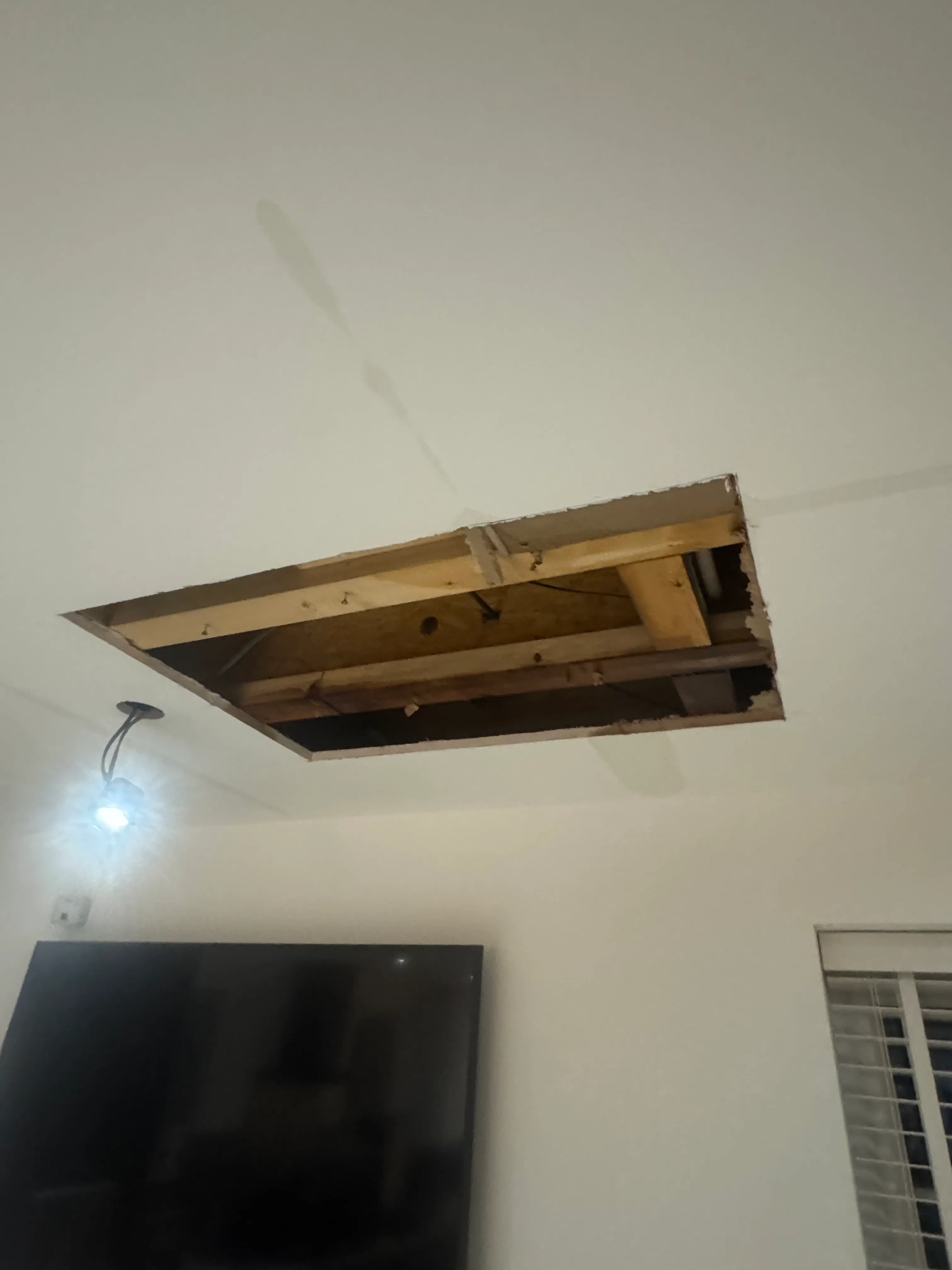
Water coming through a ceiling is one of the most stressful things that can happen in a house, mostly because it is hard to tell how bad it is. The good news is that the first few things to do are the same whatever the cause, and they are all things you can do yourself in the next five minutes.
1. Turn the water off at the stopcock
If the leak is from your plumbing, turning off the mains water stops it getting worse. The stopcock is usually under the kitchen sink. If it is not there, look where the water pipe comes into the house: a utility room, a downstairs toilet, under the stairs or in the garage. Turn it clockwise until it stops.
Then run the cold tap in the kitchen to drain what is left in the pipes, and flush the toilets once.
Two things the stopcock will not stop:
- A leak from the heating. Radiators and their pipes are a separate, sealed system. Turn the heating off at the boiler, and the leak will slow as the pressure drops.
- Rain. If the ceiling is on the top floor and it only drips when it rains, the problem is the roof, not the plumbing.
2. Keep water and electricity apart
If water is anywhere near a light fitting, a ceiling rose or a switch, turn the electricity off at the consumer unit (the fuse box) before you go near it. Switch off the circuit for that room, or the main switch if you are not sure which one it is. Do not touch switches or sockets with wet hands, and do not turn the light back on to see better. Use a torch.
3. Protect the room, and stay out from under a sagging ceiling
Move furniture, rugs and anything electrical out of the way, and put a bucket and towels under the drip.
If the ceiling is bulging or sagging, keep everyone out from underneath it. Plasterboard holding water is heavy, and it can come down in one piece. A small hole at the lowest point of the bulge lets the water drain into a bucket in a controlled way rather than all at once, but only do that from the side, at arm's length, and only if you can reach without standing under it.
4. Take photos
Before you clear anything up, take photos of the ceiling, the water and anything damaged. Most home insurance covers water escaping from pipes and appliances, and the insurer will want to see what happened.
5. Work out where it is coming from
Water travels along joists and pipes before it finds a way down, so the wet patch is not always directly under the leak. The usual causes, roughly in order of how often we see them:
- A bathroom above. A failed shower tray or enclosure seal, a bath overflow, or a leaking toilet connection. If it only drips when someone has a shower, that is almost certainly the answer.
- A loose or failed fitting on a pipe. On one recent job the water was coming from a push-fit elbow on the mains that had worked loose inside the kitchen ceiling. See the ceiling leak repair in Tamworth.
- Heating pipes or a radiator valve in the room above.
- A cold water tank or pipework in the loft, which can also freeze and split in winter.
- The roof, if the ceiling is on the top floor and the leak follows the rain.
Finding it usually means opening the ceiling in the right place. The leak investigation in Ashby-de-la-Zouch shows what that looks like.
When to call someone
If water is still coming through after you have turned the stopcock off, if it is near the electrics, or if the ceiling is sagging, treat it as an emergency. Our 24 hour emergency plumber service covers leaks across Leicestershire and Derbyshire. Call 01530 441064 and we will get to you as soon as we can.
If it was a one-off drip that has stopped, it still wants looking at, but it can wait for a booked visit.
After the leak is fixed
A wet ceiling needs to dry out properly before it is repaired, otherwise the stain comes back through the new paint. Small areas can often be patched and redecorated. Plasterboard that has soaked through and sagged needs cutting out and replacing. Because we do the plastering and decorating as well as the plumbing, the same team can come back and put the ceiling right.
Need a hand with your property?
We cover Leicestershire and Derbyshire for maintenance, renovation and drainage work.